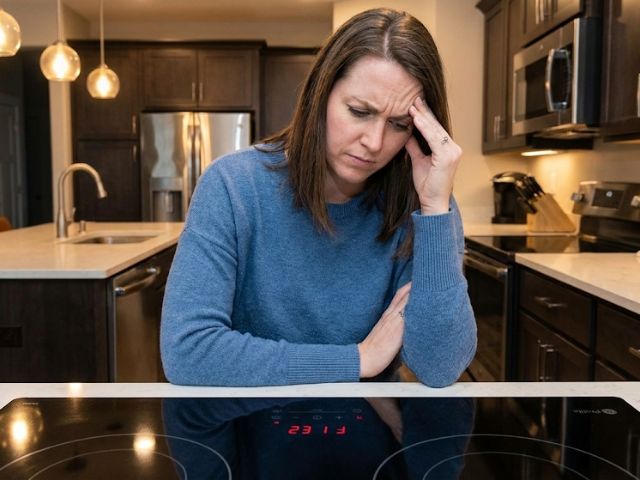
Your GE Profile cooktop was working perfectly yesterday, and now it’s flashing mysterious codes like F11, E2, or C2 across its digital display. These cryptic combinations can feel like your appliance is speaking a foreign language, leaving you frustrated and unsure whether you’re facing a minor glitch or a major malfunction. Understanding what these error codes mean is the first step toward getting your kitchen back to full functionality, and that’s where professional GE Profile Cooktop Repair in Burbank becomes invaluable. Rather than guessing or attempting risky DIY fixes based on incomplete internet advice, knowing how to interpret these diagnostic messages can save you time, money, and the headache of potentially making the problem worse.
Why Your GE Profile Cooktop Speaks in Code
Modern GE Profile cooktops are sophisticated appliances equipped with advanced diagnostic systems designed to help both users and technicians identify problems quickly. When something goes wrong—whether it’s a temperature sensor failure, an electrical issue, or a control board malfunction—your cooktop communicates through error codes rather than leaving you completely in the dark.
These codes serve multiple purposes:
- Pinpoint specific component failures rather than forcing you to troubleshoot the entire appliance
- Protect your cooktop from further damage by shutting down operations when critical errors occur
- Provide technicians with a starting point for faster, more accurate repairs
- Save diagnostic time that would otherwise be spent testing multiple components
However, the challenge for most homeowners is that these codes aren’t exactly intuitive. What does F31 mean compared to F47? Is an E1 error more serious than an E5? Without proper translation, these codes create more confusion than clarity.
Common GE Profile Cooktop Error Codes Decoded
Temperature and Sensor Related Codes
- F11 – Shorted Keypad: This error indicates that your cooktop’s control panel is receiving continuous input from a stuck or damaged key. The appliance thinks you’re constantly pressing a button, which can prevent normal operation. This often requires control panel replacement.
- F10 – Runaway Temperature: One of the most serious codes, F10 signals that your cooktop has detected temperatures exceeding safe limits. This could stem from a faulty temperature sensor, a malfunctioning control board, or actual overheating. Immediate professional attention is essential.
- F3 or E2 – Open Temperature Sensor: Your cooktop relies on temperature sensors to regulate heat accurately. When these sensors fail or their connections become loose, the appliance can’t properly monitor cooking temperatures, triggering this error.
Electrical and Power Issues
- C2 or C-2 – Internal Temperature Too High: This code appears when the cooktop’s internal components are overheating, often due to inadequate ventilation, blocked cooling systems, or failing internal fans. Continued operation with this error can damage expensive components.
- F9 – Relay Board Failure: The relay board controls power distribution to heating elements. When this board fails, your cooktop may not heat properly or may display erratic behavior across multiple burners.
- E5 – Control Board Communication Error: This indicates that the control board and user interface aren’t communicating correctly, potentially due to loose connections, damaged wiring, or component failure.
Element-Specific Codes
- E1 through E4: These codes typically relate to specific heating elements or burners. E1 might indicate a front-left element issue, while E4 could point to a rear-right problem. The exact meaning varies by model.
- F47 – Cooktop/Oven Mismatch: If you have a range rather than a standalone cooktop, this error indicates communication problems between the cooktop and oven control systems.
When to Call Professionals vs. Simple Resets
Some error codes can be cleared with a simple reset—unplugging your cooktop for 30 seconds or flipping the dedicated circuit breaker. This works for temporary glitches or power surge-related errors. However, if the code returns immediately or persists after multiple reset attempts, you’re dealing with a genuine hardware or sensor problem that requires professional diagnosis.
Attempt a reset if:
- The error appeared suddenly during a power fluctuation
- This is the first occurrence of the code
- Your cooktop is otherwise functioning normally
Call a professional immediately if:
- The error code returns after resetting
- You smell burning, see smoke, or notice unusual sounds
- Multiple error codes appear simultaneously
- The cooktop is less than a few years old (warranty implications)
The Risks of Ignoring Error Codes
Many homeowners make the mistake of dismissing error codes if the cooktop still seems to work partially. Perhaps only one burner is affected, or the code appears but the appliance still heats. This approach is dangerous for several reasons.
Continued operation with active error codes can lead to complete component failure, turning what might have been a $200 sensor replacement into a $800 control board repair. Safety concerns also escalate—overheating errors especially should never be ignored, as they can lead to electrical fires or damage to surrounding cabinetry.
Additionally, manufacturing warranties often become void if you continue operating an appliance with known faults. What could have been a covered repair becomes an out-of-pocket expense simply because the error warnings were disregarded.
What Professional Diagnostics Reveal
When you contact experienced technicians for cooktop repair, they don’t just read the error code and order a part. Professional diagnostics involve comprehensive testing that goes far beyond surface-level code interpretation.
Technicians use specialized multimeters and diagnostic equipment to verify that the error code accurately reflects the actual problem rather than a secondary symptom. They test electrical continuity, measure resistance values in heating elements, check voltage levels at various points, and examine wiring connections that may have loosened over time.
This thorough approach ensures you’re not replacing expensive components unnecessarily. Sometimes what appears to be a control board failure is actually a $15 wiring harness issue—but only professional testing can make that distinction.
Model-Specific Variations You Should Know
Not all GE Profile cooktops display errors the same way. Older models might show codes differently than newer ones, and induction cooktops have entirely different error codes compared to radiant electric models. The PP7036 displays errors differently than the PHP9036, for instance.
This is why online troubleshooting guides can be misleading—what’s accurate for one model family may be completely incorrect for yours. Professional technicians maintain updated databases with model-specific information, ensuring accurate interpretation regardless of which GE Profile cooktop you own.
Why Burbank Residents Trust Local Expertise
At GE Monogram Inc Repair, we specialize in translating those confusing error codes into clear solutions for Burbank homeowners. Our factory-trained technicians carry genuine GE parts and have the diagnostic equipment necessary to identify problems accurately the first time, saving you the frustration of multiple service calls or incorrect repairs.
Before dealing with cooktop issues, you might find it helpful to understand the broader picture of appliance repair investments—check out our previous blog on The Hidden Costs of GE Profile Oven Repair in Pasadena for valuable insights.
Conclusion
Error codes don’t have to leave you feeling helpless or confused. While they might seem like cryptic messages from your malfunctioning cooktop, these diagnostic codes are actually valuable tools that help identify specific problems quickly and accurately. Understanding the basics—knowing which codes signal minor issues versus major concerns—empowers you to make informed decisions about when to attempt simple resets and when to seek professional help. However, the complexity of modern GE Profile cooktops means that accurate interpretation and repair require specialized knowledge and proper diagnostic equipment. When those perplexing codes flash across your display, remember that expert GE Profile Cooktop Repair in Burbank is just a phone call away, ready to translate confusion into clarity and get your kitchen functioning flawlessly once again.
Frequently Asked Questions
Q: Can I continue using my GE Profile cooktop if it’s showing an error code but still heating?
You shouldn’t continue using a cooktop displaying error codes, even if it appears functional. The error indicates a problem that could worsen with continued use, potentially causing complete failure or creating safety hazards like electrical fires.
Q: How much does it typically cost to repair error code issues on GE Profile cooktops?
Repair costs vary widely depending on the specific error code and required parts, ranging from $150 for simple sensor replacements to $600+ for control board issues. A professional diagnostic visit will provide an accurate estimate for your specific situation.
Q: Are GE Profile cooktop error codes the same across all models and years?
No, error codes can vary significantly between different model families and manufacturing years. While some codes are consistent across models, others are specific to certain product lines, which is why professional diagnosis is crucial for accurate identification.
Don’t Let Error Codes Keep You from Cooking!
Is your GE Profile cooktop flashing confusing error codes? Our certified technicians at GE Monogram Inc Repair are standing by to help Burbank residents decode the problem and restore full functionality to your kitchen. We offer same-day service appointments, upfront pricing, and a 90-day warranty on all repairs. Call us today at [your phone number] or visit our website to schedule your diagnostic appointment and get your cooktop working perfectly again!