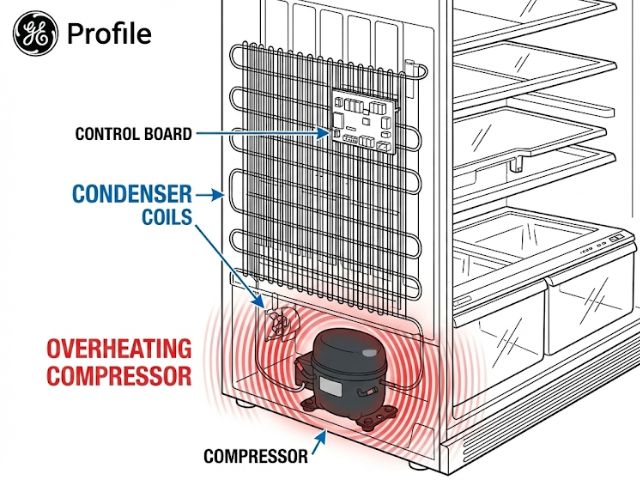
Your refrigerator works around the clock to keep your food fresh and safe, but when the compressor starts running hotter than normal, it’s a warning sign you shouldn’t ignore. If your GE Profile Refrigerator Compressor Overheats, you’re facing more than just an inconvenience—you’re risking complete system failure, spoiled groceries, and expensive emergency repairs. The compressor is essentially the heart of your refrigeration system, pumping refrigerant through the coils and maintaining the cold temperatures your family depends on. When this critical component begins to overheat, it’s struggling to perform its job, working harder and consuming more energy while delivering less cooling power. Understanding why this happens and what you can do about it can save you hundreds or even thousands of dollars in repair and replacement costs.
Common Causes of Compressor Overheating
Multiple factors can cause your GE Profile refrigerator‘s compressor to run excessively hot. Identifying the root cause is essential for implementing the right solution and preventing permanent damage.
Dirty Condenser Coils
- The condenser coils are responsible for dissipating heat from your refrigerator. When these coils become caked with dust, pet hair, and kitchen grease, they can’t release heat efficiently. This forces the compressor to work overtime, generating excess heat as it struggles to maintain proper temperatures. Most manufacturers recommend cleaning these coils every six months, but households with pets or dusty environments may need more frequent maintenance.
Inadequate Ventilation
- Your GE Profile refrigerator needs proper airflow to function efficiently. When the appliance is pushed too close to the wall or surrounded by cabinets without sufficient clearance, hot air becomes trapped around the compressor and condenser coils. This creates a heat buildup that prevents the cooling system from operating within its designed temperature range. Most refrigerators require at least one to two inches of clearance on all sides and several inches at the back.
Faulty Start Relay
- The start relay helps the compressor motor begin its cycle. When this component fails, the compressor may struggle to start properly, drawing excessive current and generating abnormal heat. A clicking sound accompanied by the compressor feeling extremely hot to the touch often indicates start relay problems. This relatively inexpensive part can cause major damage if not replaced promptly.
Overcharged or Undercharged Refrigerant
- The refrigerant system must contain precisely the right amount of coolant to function properly. Too much refrigerant increases pressure and causes the compressor to work harder, while too little forces the compressor to run continuously trying to achieve the set temperature. Both scenarios lead to overheating and accelerated wear on the compressor components.
Worn Compressor Components
- Like any mechanical device, compressors experience wear over time. Internal components such as bearings, pistons, and valves can degrade, causing friction and inefficiency. An aging compressor naturally runs hotter as it loses efficiency, and eventually reaches a point where replacement becomes more cost-effective than continued repairs.
Warning Signs Your Compressor Is Overheating
Recognizing the symptoms of an overheating compressor early can prevent complete system failure:
- Excessive heat radiating from the back or bottom of the refrigerator
- The compressor running continuously without cycling off
- Unusual noises including grinding, buzzing, or clicking sounds
- Rising internal temperatures despite the thermostat setting
- Higher than normal energy bills
- The compressor feeling too hot to touch comfortably
The Consequences of Ignoring an Overheating Compressor
Allowing a compressor to continue overheating creates a cascade of problems. The excessive heat breaks down the compressor oil, reducing lubrication and accelerating internal wear. Electrical components can fail, potentially causing short circuits or fire hazards. Food safety becomes compromised as temperatures fluctuate unpredictably. Most critically, a completely failed compressor typically costs 50-70% of the price of a new refrigerator, making replacement the only viable option in many cases.
Preventive Maintenance Steps
Protecting your compressor from overheating requires consistent maintenance and attention to your refrigerator’s operating environment:
Regular Coil Cleaning
- Schedule condenser coil cleaning every six months using a coil brush or vacuum attachment. This simple task dramatically improves efficiency and prevents heat buildup. For households with pets, quarterly cleaning may be necessary.
Ensure Proper Clearance
- Measure the space around your refrigerator and ensure it meets manufacturer specifications. Pull the unit slightly away from the wall if needed, and never block ventilation grilles with storage items or decorations.
Monitor Temperature Settings
- Avoid setting the thermostat lower than necessary. The refrigerator compartment should maintain 37-40°F, while the freezer should stay at 0-5°F. Excessively cold settings force the compressor to work harder without providing additional food safety benefits.
Check Door Seals
- Damaged or dirty door gaskets allow cold air to escape, forcing the compressor to run longer and harder. Clean seals regularly and test them by closing the door on a dollar bill—if you can pull it out easily, the seal needs replacement.
Professional Solutions for Compressor Problems
While homeowners can handle basic maintenance, diagnosing and repairing compressor issues requires professional expertise. Refrigerant handling requires EPA certification and specialized equipment. Electrical testing demands knowledge of complex wiring systems. Attempting DIY repairs on compressor problems often voids warranties and can create dangerous situations.
Before holiday guests arrive and put extra demands on your kitchen appliances, consider our previous advice on Why Book Holiday Dishwasher Repair Before Guests Arrive to understand the importance of proactive appliance maintenance.
Trust GE Monogram Inc Repair for Expert Service
When your GE Profile refrigerator shows signs of compressor trouble, you need specialists who understand these sophisticated appliances inside and out. Here at GE Monogram Inc Repair, our certified technicians have the training, tools, and genuine parts to diagnose and resolve compressor issues efficiently. We prioritize same-day service for emergency situations and back our work with comprehensive warranties that give you peace of mind.
Take Action Before It’s Too Late
Don’t wait until your compressor fails completely and you’re facing spoiled food and emergency repair costs. If you’ve noticed any warning signs of an overheating compressor, contact a qualified appliance repair specialist immediately. A professional inspection can identify problems early when repairs are simpler and more affordable. Regular maintenance visits can extend your compressor’s lifespan by years, making them one of the smartest investments in your kitchen’s reliability. Remember, addressing GE Profile Refrigerator Compressor Overheats issues promptly protects your appliance investment, safeguards your food supply, and prevents the inconvenience and expense of unexpected breakdowns.
Frequently Asked Questions
How hot should a refrigerator compressor normally get? A properly functioning compressor will feel warm to the touch, typically reaching 130-160°F during operation. If the compressor is too hot to hold your hand on comfortably for more than a few seconds, it’s likely overheating and needs professional attention.
Can I still use my refrigerator if the compressor is overheating? You should minimize use and call for repair service promptly. Continuing to operate a refrigerator with an overheating compressor risks complete failure, potential fire hazards, and food safety issues from inconsistent temperatures.
How much does it cost to replace an overheated compressor? Compressor replacement typically costs $400-$800 including parts and labor, though this varies by model. Given that this represents 50-70% of a new refrigerator’s cost, technicians often recommend evaluating the unit’s overall age and condition before proceeding with this major repair.