GE Monogram refrigerators are prized for their sleek design, cutting-edge technology, and premium performance. Yet, even these high-end appliances sometimes develop leaks, causing frustration, water damage, and wasted food. For homeowners in San Francisco, understanding why these leaks happen—and knowing the simple steps to fix them—can save time, money, and stress.
In this guide, we’ll dive into the common causes of leaks in GE Monogram refrigerators, explain why they happen, and provide practical solutions that homeowners can implement themselves or with professional assistance.
Common Causes of Refrigerator Leaks
Refrigerator leaks are rarely random; they usually indicate an underlying issue that can be addressed. Some of the most frequent causes include:
1. Clogged or Frozen Defrost Drain
Most modern GE Monogram refrigerators use a defrost system that periodically melts frost on the evaporator coils. The melted water travels through a drain to a pan beneath the fridge.
- Problem: Over time, food particles, debris, or ice can clog this drain, causing water to pool inside the fridge or leak onto the floor.
- Symptoms: Puddles in the fresh food compartment, water under drawers, or ice forming at the bottom of the freezer.
Simple Fix:
Clear the defrost drain using warm water or a pipe cleaner. For frozen clogs, use a hairdryer or warm cloth to melt the ice carefully.
2. Damaged or Misaligned Door Gaskets
A tight seal is crucial for keeping cold air in and condensation at bay. Over time, gaskets can warp, crack, or accumulate grime.
- Problem: Damaged or dirty gaskets allow warm, moist air to enter, increasing condensation inside the fridge and on the floor.
- Symptoms: Water pooling near the door, uneven cooling, or frost build-up.
Simple Fix:
Clean the gasket with warm, soapy water and a soft cloth. If damaged, replace it with a genuine GE Monogram gasket to restore proper sealing.
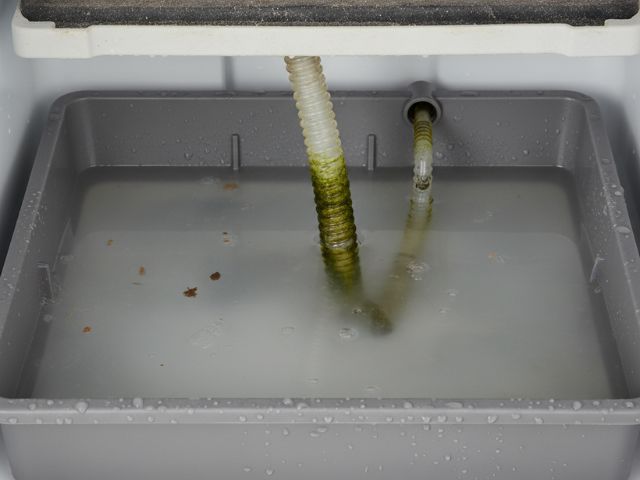
3. Blocked or Overflowing Drip Pan
Underneath the refrigerator is a drip pan that collects water from the defrost cycle. If it’s cracked, improperly seated, or overflowing, leaks occur.
- Problem: Dust, debris, or misalignment can prevent water from draining correctly.
- Symptoms: Water pooling underneath the fridge, unusual odors from stagnant water.
Simple Fix:
Remove the drip pan, empty it, clean it thoroughly, and ensure it’s seated correctly. Inspect for cracks—replace if necessary.
4. Improper Refrigerator Leveling
A refrigerator that isn’t level may not allow water to flow toward the drain, causing accumulation inside the fridge.
- Problem: Uneven flooring or shifted feet can create a slope, preventing proper drainage.
- Symptoms: Water collects in drawers or on the floor, while the freezer may appear normal.
Simple Fix:
Use a level to check the fridge. Adjust the leveling legs or place shims under the fridge to ensure proper tilt. A slight tilt toward the drain hole ensures water flows correctly.
5. Malfunctioning Water Supply Line (for Icemakers/Water Dispensers)
If your GE Monogram has a built-in water dispenser or icemaker, leaks can originate from the water supply line.
- Problem: Loose connections, cracks, or high water pressure can cause leaks.
- Symptoms: Water pooling near the base of the fridge, dripping from the dispenser, or leaks behind the fridge.
Simple Fix:
Turn off the water supply, check all connections for tightness, and inspect the line for cracks. Replace the tubing if damaged.
6. Excessive Condensation
San Francisco’s unique climate—with cool, humid air—can exacerbate condensation issues. Opening the refrigerator frequently or storing hot food increases moisture levels.
- Problem: Excess humidity can overwhelm the drainage system, resulting in leaks.
- Symptoms: Beads of water on shelves, fogging inside the fridge, or puddles on the floor.
Simple Fix:
Avoid placing hot or uncovered foods directly in the fridge. Use airtight containers, and consider using a small dehumidifying product inside the fridge.
Preventive Measures to Avoid Future Leaks
While fixing the immediate leak is important, preventing future problems is even better. Here are some proactive tips:
- Regularly Clean the Defrost Drain: Monthly inspection prevents clogs before they cause leaks.
- Maintain Gaskets: Wipe seals weekly and inspect for damage. Replace gaskets every 5–7 years, or sooner if worn.
- Level Your Refrigerator: Check periodically, especially after moving the appliance.
- Inspect the Drip Pan: Empty and clean the pan every few months to avoid overflow and odors.
- Control Humidity: Avoid leaving the fridge door open for extended periods and store hot foods properly.
- Professional Maintenance: Schedule annual service to check water lines, icemakers, and cooling systems.
When to Call a Professional
Some issues may be more complex than a simple DIY fix. For example:
- Persistent leaks despite clearing the drain.
- Cracked internal water lines or faulty ice maker components.
- Refrigerant or compressor-related issues causing condensation.
In San Francisco, calling a qualified GE Monogram service technician ensures safe, effective, and long-lasting repairs. Professionals can diagnose hidden problems, replace defective parts, and help prevent future leaks.
Tips for Choosing the Right Refrigerator Repair Service in San Francisco
- Certified GE Technicians: Look for professionals trained specifically on GE Monogram appliances.
- Transparent Pricing: Ensure upfront estimates with no hidden charges.
- Prompt Response: Leaks can cause water damage—choose services with emergency availability.
- Customer Reviews: Positive testimonials indicate reliable service and satisfied homeowners.
- Warranty on Repairs: Reputable services stand by their work, providing peace of mind.
DIY Fix vs. Professional Repair: Which Should You Choose?
DIY Fix:
- Ideal for minor issues such as unclogging drains, cleaning gaskets, or leveling the fridge.
- Saves money and allows quick solutions for small leaks.
Professional Repair:
- Required for damaged water lines, persistent leaks, or compressor-related issues.
- Ensures proper diagnosis, avoids further damage, and maintains appliance warranty.
Rule of Thumb: If a leak persists after basic cleaning and adjustment, or if you’re unsure of the cause, call a professional.
Case Study: A Common Leak Scenario in San Francisco
Situation: A homeowner in the Sunset District noticed water pooling in the bottom drawer of their GE Monogram fridge.
Investigation: A technician discovered the defrost drain was frozen and partially clogged with food particles. The refrigerator was also slightly tilted backward, causing water to flow incorrectly.
Solution: The technician cleared the drain, melted the ice, and leveled the fridge. The homeowner was advised to check the drain monthly and avoid placing hot foods directly in the fridge.
Result: The leak stopped immediately, and no further issues occurred over the next year.
This example highlights how multiple small factors can combine to create leaks—and how simple fixes often resolve the problem quickly.
Maintaining Your GE Monogram Refrigerator: Best Practices
To minimize leaks and prolong your fridge’s lifespan:
- Monitor Temperature Settings: Keep the fridge at 37–40°F (3–4°C) and freezer at 0°F (-18°C).
- Avoid Overloading: Overstuffed shelves block airflow, causing excess condensation.
- Keep Door Seals Clean: Prevent dirt buildup that compromises sealing.
- Check Ice Maker Regularly: Inspect water lines and connections for early leaks.
- Schedule Preventive Maintenance: Annual check-ups can detect small issues before they escalate.
Frequently Asked Questions
- Why is my GE Monogram fridge leaking water on the floor?
Most leaks are caused by clogged defrost drains, faulty gaskets, or issues with the drip pan. Less common causes include water line problems or improper leveling. - Can I fix a frozen defrost drain myself?
Yes, you can use warm water or a hairdryer to melt the ice. Ensure the fridge is unplugged and follow safety precautions. - How do I know if my gasket needs replacement?
If the gasket is cracked, warped, or unable to form a tight seal, it should be replaced to prevent leaks and maintain energy efficiency. - Is it normal for some condensation to appear inside the fridge?
Yes, minor condensation can occur, especially in humid climates like San Francisco. However, persistent puddles or drips indicate a problem. - How often should I clean the drip pan?
Every 3–6 months is recommended, but more frequent cleaning may be needed if leaks or odors occur.
Conclusion: Stop the Leak, Protect Your Home
A leaking GE Monogram refrigerator can disrupt daily life, damage flooring, and lead to spoiled food. Fortunately, many leaks have simple causes: clogged drains, misaligned doors, or minor maintenance issues. By understanding these common problems and implementing preventive measures, homeowners in San Francisco can maintain their premium appliances without stress.
Whether you tackle minor fixes yourself or enlist a professional repair service, acting promptly ensures your GE Monogram fridge continues to function flawlessly, keeping your food safe and your kitchen dry.
Take control of your refrigerator maintenance today—check drains, clean gaskets, and monitor water lines. With consistent care, you can enjoy the luxury of a top-of-the-line GE Monogram refrigerator without the headaches of leaks.